Getting to Know Pól Deeds: Irish Language Commissioner for NI.
Northern Ireland made history in October 2025 with the appointment of Pól Deeds as its very first Irish Language Commissioner — a landmark moment under the Identity and Language (Northern Ireland) Act 2022. We sat down to explore what this role means, what’s in the pipeline, and why it matters for everyone living here.
Who is Pól Deeds?
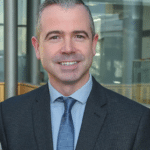
Pól officially took up his post in November 2025 for a five-year term. He brings a wealth of experience to the role, having previously led An Droichead, an Irish language organisation based in south Belfast, and served as deputy chief executive of Foras na Gaeilge — the cross-border body dedicated to promoting Irish across the island of Ireland. Safe to say, he knows this world inside out.
So, What Does the Commissioner Actually Do?
At its heart, the role is about making sure public bodies are delivering better services through the Irish language for those who use it in everyday life. As Pól puts it himself, he is there to provide the Irish language with official recognition in public life and to push for meaningful improvements from public bodies.
A big part of the work right now involves developing standards of best practice for how public bodies should use Irish. Pól and his team are deep in the research phase, with a consultation process to follow. Once finalised, the standards will need sign-off from First Minister Michelle O’Neill MLA and deputy First Minister Emma Little-Pengelly MLA, with Pól aiming to present them before the end of 2026.
Once those standards are published, a formal complaints procedure will follow — meaning that if someone feels a public body has fallen short, they’ll have a clear route to raise that with the Office of the Irish Language Commissioner.
Learning from Others — A Trip to Wales
In February 2026, Pól and his team visited both the Irish Language Commissioner in the South and the Welsh Language Commissioner. The Wales trip was particularly eye-opening. Pól described the Welsh approach as a completely new system, where the value of the local minority language was woven throughout public life.
Cardiff University stood out as a brilliant example — students were actively encouraged to speak Welsh, bilingual signage was everywhere on campus, and there was a genuine culture of respect for the language at every level of the organisation. Pól described it as a huge encouragement for him and his team.
He came back with a clear takeaway: visibility matters. Making the Irish language visible in everyday spaces is a foundational step in protecting it, and it will be central to the standards he’s developing. Fittingly, representatives from Ulster University and Queen’s University joined the trip, and Pól has already drafted advice on bilingual signage for both institutions — with plans to share it with them shortly.
The Honest Challenges
Pól doesn’t shy away from the difficulties either. He acknowledges that the legislation doesn’t go as far as providing full language rights to Irish speakers, and that requiring both the First Minister and deputy First Minister to approve the standards creates political complications.
The biggest challenge, he says, is the political hostility that still surrounds the Irish language. There are voices in political life actively working against the progress of the language — and while Pól is confident that public bodies are ready to engage positively, he worries that the political noise makes his broader goal of fostering reconciliation much harder.
His hope? To move the Irish language out of that political battleground altogether.
A “Heady Period” for Irish
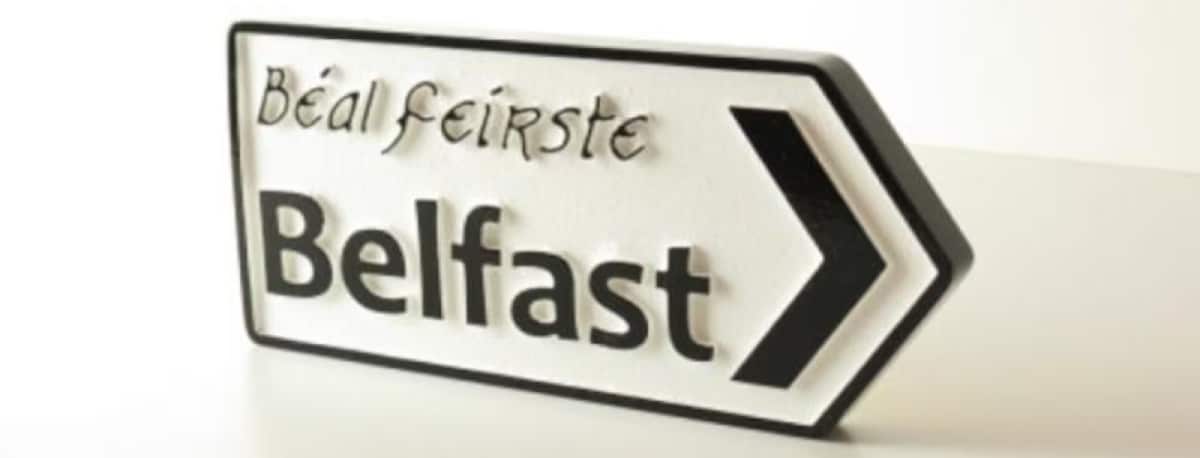
Despite the challenges, Pól is genuinely optimistic. He describes this as a heady period for the Irish language, with visible changes happening all around — from bilingual street signs appearing across the North to a fascinating shift in who is actually learning Irish.
Traditionally associated with nationalist identity, Irish is now being embraced by a much wider community. He points to the Turas project on the Newtownards Road in east Belfast — a loyalist area — as a powerful example of people crossing cultural boundaries to engage with the language. For Pól, that’s proof that Irish can belong to everyone, regardless of whether someone sees themselves as Irish, British, or anywhere in between.
A Final Word
Pól’s closing message is one of hope and invitation. With political goodwill, he believes real, meaningful change is possible — change that would formally recognise the value of the Irish language, honour the identity of Irish speakers, and create a neutral, welcoming space for the language to thrive in public life.
I think that’s something worth getting behind; but any reports or recommendations must by submitted to the First & Deputy First Ministers Office , who may approve them with or without modifications. The Commissioner’s toolkit amounts to: setting standards, monitoring compliance, investigating complaints, publishing findings, and laying reports before the Assembly. The ultimate lever is reputational and political pressure via Assembly scrutiny — not legal compulsion. The Commissioner’s powers are recommendatory and investigatory, the Commissioner cannot compel public authorities to act. This aligns with what Pól Deeds hinted at in the interview, where he acknowledged the legislation falls short of granting full language rights, and that his influence over public bodies relies heavily on them being willing to follow his advice. Will the DUP, via Emma Little Pengelly in her role as Deputy First Miinister, sign off on proposals brought forward by the Irish Language Commissioner? In the current climate of hostility toward the language from some within the PUL community, expecting co-operation from the DUP seems a somewhat optimistic position to hold. I fear a high level political fight will ensue when the report is brought forward, a fight which may ultimately end up in the courts.
This blog post is based on an interview originally published by Agenda NI. You can read the original article at agendani.com.
This piece was originally written in Irish. Please click here to access the Irish language version.