Posted on Leave a comment

Aran Sweaters from Ireland – History, Symbolism & Current Popularity.

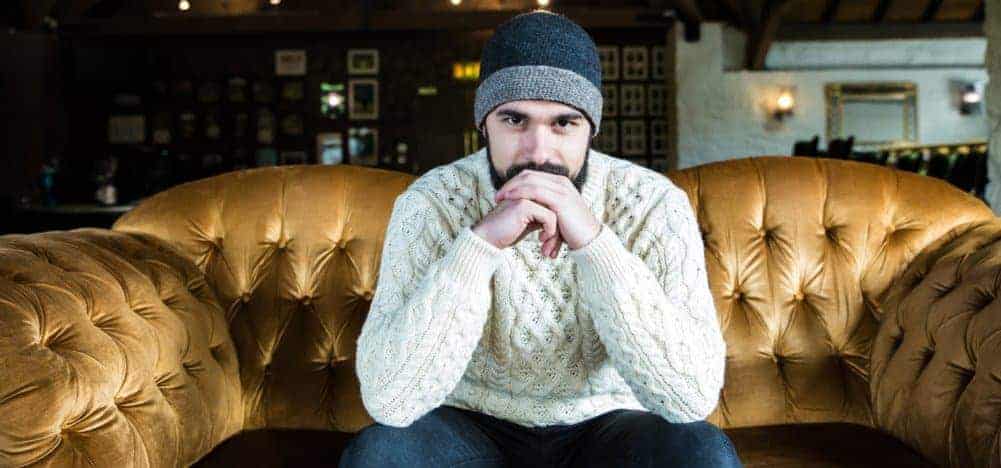
Irish Aran Wool Sweaters

Origins of the Aran Sweater

Did you know that each Aran sweater can contain up to 100,000 stitches? You might be surprised to learn that these iconic garments originated in the early 20th century on Ireland’s Aran Islands, where fishermen faced unforgiving Atlantic weather. The sweaters’ unique designs aren’t just for show—they carry deep symbolic meanings tied to the islanders’ heritage. As you explore theseintricate patterns and their cultural significance, you’ll uncover how these practical pieces of clothing became a tribute to the resilience and creativity of the Aran community.

Historical Background

The origins of the Aran sweater date back to the early 20th century, deeply rooted in the daily life and traditions of the Aran Islands off the west coast of Ireland. You’ll find that these sweaters weren’t just about style; they were essent

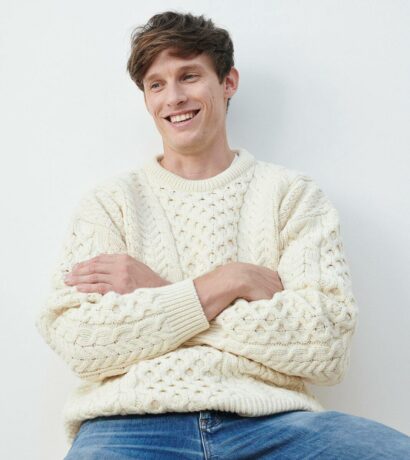
Irish Aran Wool Sweater

ial for the local fishermen who needed protection from the harsh Atlantic weather. Crafted from unscoured wool, the natural lanolin in the wool provided much-needed water resistance.
Each Aran sweater tells a story through its intricate stitch patterns. These patterns weren’t random; they carried significant meanings. For example, the cable stitch symbolized the fishermen’s ropes and hoped for safe and bountiful catches. The diamond stitch represented the small fields of the islands, a wish for success and wealth. The honeycomb pattern, resembling a bee’s hard work, symbolized good fortune.
You might be surprised to learn that these sweaters were traditionally knitted by the women of the islands, passing down techniques through generations. They were a testament to the islanders’ resilience and creativity.

The Aran Islands

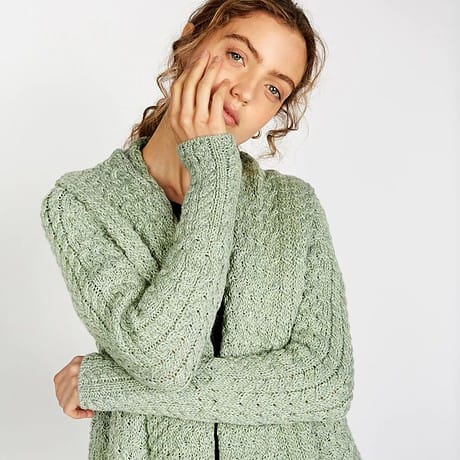
Nestled off Ireland’s west coast, the Aran Islands offer a glimpse into a unique culture rich with tradition and history. When I last stepped onto these rugged islands, I was immediately enveloped by their raw beauty and the warmth of the local community. The islands—Inish Mór, Inishmaan, and Inisheer—are known for their stone walls, ancient forts, and spectacular coastal views. Life here moves at its own pace, deeply rooted in the rhythms of the sea and land. I had traveled there to visit my college friend Caoimhín Ó Flaithbheartaigh (Kevin O’Flaherty) who grew up on the middle of the three islands, Inishmaan. The islanders spoke Gaelic as their first language and the older women still wore traditional and fascinating garments. I also remember meeting Daithi (David) who was home on the island from Chicago, & the new parish priest who had just arrived from Australia. I could not help but wonder how Daithi transitioned from this island life to construction work with the Irish in Chicago. Aran Sweater for Women
Inishmaan is home to a little cottage owned by the Irish revolutionary Patrick Pearse, the cottage still stands today. The Iron Age fort of Dun Conor is also located on the island & the ancient walls have endured majestically for 2,000 years.
The Aran Islands are more than just a picturesque destination; they’re the birthplace of the iconic Aran sweater. The islanders have perfected the art of knitting these garments over generations, using techniques passed down through families. The wool used is often thick and hearty, providing much-needed warmth against the Atlantic winds. Living in such a harsh environment has fostered a strong sense of community and self-reliance among the inhabitants.
Exploring the islands, you’ll encounter small, family-run shops where these exquisite sweaters are made and sold. Each piece tells a story, reflecting the history and spirit of the Aran Islands. The sweaters aren’t just clothing but a symbol of the islanders’ resilience and ingenuity.

Traditional Stitch Patterns

Traditional stitch patterns in Aran sweaters, like the intricate cable knit and honeycomb designs, serve as both functional and symbolic elements in these timeless garments. When you look closely, you’ll notice how each stitch creates not just texture, but also adds durability and warmth, making the sweater ideal for the harsh weather conditions of the Aran Islands.
The cable knit, for example, mimics the ropes used by fishermen, providing a robust structure that offers extra insulation. You might feel the added thickness and warmth it brings, perfect for cold, windy days.
The honeycomb pattern, resembling the hardworking bee’s hive, creates a visually appealing texture while also adding a layer of insulation.
Other patterns like the diamond stitch and basket stitch aren’t just for show either. The diamond stitch sweater is designed to trap heat, keeping you cozy. The basket stitch, with its tight weave, provides a snug fit, ensuring the sweater stays close to your body, reducing heat loss.

Symbolism and Meaning

In Aran sweaters, each stitch pattern carries deep symbolic meaning, often reflecting the rich cultural heritage of the Aran Islands. When you look at an Aran sweater, you’re not just seeing a piece of clothing; you’re witnessing a tapestry of stories and traditions.
For instance, the cable stitch represents the ropes used by fishermen, symbolizing hopes for a bountiful catch and safety at sea. The diamond stitch symbolizes the small fields of the islands, representing wealth and success. It’s a reminder of the hard work and perseverance required to cultivate the land.
The honeycomb stitch, another common pattern, signifies the hard-working bee and is believed to bring good fortune and a sweet reward for labor. There’s also the basket stitch, reflecting the wicker baskets used to carry fish. This pattern is thought to bring a plentiful catch and prosperity.
Each stitch is more than decorative; it’s a wish for the wearer’s wellbeing and prosperity. By donning an Aran sweater, you’re wrapping yourself in a rich tradition that seeks to protect, bless, and bring good fortune. This unique blend of utility and symbolism makes the Aran sweater a timeless and meaningful garment. Irish Aran Wool Sweater

Evolution of Materials

Over the years, the materials used to craft Aran sweaters have evolved greatly, enhancing both their comfort and durability. Initially, these sweaters were made from unscoured wool, which retained natural lanolin, providing excellent water resistance. This was vital for fishermen battling the harsh Atlantic weather. However, unscoured wool could be quite rough on the skin.
Modern Aran sweaters often use softer, treated wool, like Merino wool, which offers a luxurious feel without sacrificing warmth. This innovation has made Aran sweaters more comfortable for everyday wear while retaining their traditional insulating properties. The inclusion of Merino wool has also expanded the appeal of Aran sweaters beyond their utilitarian origins, making them a fashionable choice for people around the world.
In addition to wool, synthetic fibers have been introduced, providing even more options for wearers. These materials can enhance the sweater’s elasticity and durability, allowing for easier care and longer-lasting wear. Today’s Aran sweaters might blend wool with acrylic or other synthetics to create garments that are both stylish and practical.

Aran Wool Sweaters from Ireland.

Global Popularity

Aran sweaters have captivated fashion enthusiasts worldwide, transcending their humble origins to become a global style icon. No matter where you are, you’ll likely spot someone donning this timeless knitwear. The intricate patterns and cozy warmth of these sweaters have won hearts from New York to Tokyo. They’ve become a staple in wardrobes, not just for their aesthetic appeal but also for their remarkable functionality.
You’ll find Aran sweaters featured in high-end fashion shows, highlighted in style magazines, and even worn by celebrities. Their versatility makes them suitable for any occasion, whether it’s a casual day out or a more formal event. The global demand has led to a surge in production, with both traditional hand-knitted options and machine-made variants available.
The international market for Aran sweaters has also given rise to numerous online stores, making it easier than ever to purchase one. Many brands offer extensive selections, allowing you to choose from various colors, patterns, and materials. The global popularity of Aran sweaters is a tribute to their enduring charm and practical benefits, ensuring they’ll remain a beloved wardrobe essential for years to come.
Modern Interpretations
Today’s fashion landscape embraces modern interpretations of the classic Aran sweater, blending tradition with contemporary flair. You’ll notice that modern Aran sweaters don’t just stick to the traditional cream color. Designers now offer a palette of vibrant hues—think deep blues, rich greens, and even bold reds. This makes it easier to incorporate an Aran sweater into any wardrobe, whether you’re dressing up for a special occasion or keeping it casual.
You’ll also find that today’s Aran sweaters aren’t limited to the classic crew neck. Modern designs include turtlenecks, V-necks, and even cardigans with stylish shawl collars. These variations give you more options to suit your personal style. Plus, contemporary Aran sweaters often use softer, more luxurious materials like merino wool, blending the rugged heritage of the original with the comfort you desire.
Functionality hasn’t been overlooked either. Many modern Aran sweaters feature practical additions like pockets, zippers, and buttons. This combination of style and utility ensures that you’re not just wearing a piece of history but also a garment that meets today’s needs.


Frequently Asked Questions

How Should an Aran Sweater Be Properly Cared for and Washed?
Think you can just throw your Aran sweater in the washing machine? Think again! Hand wash it in cool water with gentle detergent, then reshape and dry flat. Treat it like royalty, not a mere mortal garment!

Are There Typical Colors Associated With Aran Sweaters?
Aran sweaters typically come in natural cream, symbolizing the unbleached wool’s purity. You’ll also find them in earthy tones like oatmeal, charcoal, and moss green. These colors reflect the rugged, natural beauty of their origins.

What Are the Key Differences Between Hand-Knit and Machine-Knit Aran Sweaters?
Hand-knit Aran sweaters offer unique, intricate patterns and a personal touch, while machine-knit versions provide consistency and affordability. You’ll find that hand-knit sweaters often feel warmer and more authentic, but machine-knit ones are more accessible.

How Can I Ensure I’m Buying an Authentic Aran Sweater?
To guarantee you’re buying an authentic Aran sweater, look for labels indicating it’s made in Ireland. Check the material is 100% wool, preferably merino. Authenticity is key, so buy from reputable retailers or directly from Irish sources.

Do Aran Sweaters Come in Different Sizes and Fits?
Yes, Aran sweaters come in various sizes and fits. You can find options for men, women, and children. Look for different styles like crew neck, turtleneck, and cardigans to suit your preference and body type.

Conclusion

In the end, the Aran sweater is more than just a piece of clothing; it’s a tribute to the resilience and artistry of the Aran Islanders. Wearing one, you’re not just keeping warm; you’re embracing a rich history and culture.
Remember, ‘A stitch in time saves nine.’ By cherishing these traditions, we preserve the past while weaving it into the fabric of our modern lives.
So, wear your Aran sweater with pride and connection.

Posted on Leave a comment

CelticClothing.com – Traditional Design, Modern Fashion & Sustainable Style

Irish Gifts - Aran Wool Sweaters.

CelticClothing.com is an online store that specializes in traditional Irish clothing with a modern fashion twist. We offer a wide range of products, including Aran sweaters, tweed caps, and tweed vests, all inspired by the rich heritage and style of Ireland. The brand aims to capture the essence of Irish culture and tradition while incorporating contemporary design elements.

The story of CelticClothing.com begins with the deep connection between Ireland and America. Over the years, millions of Irish immigrants have made their way to the United States, bringing with them their traditions, including their distinctive clothing styles. CelticClothing.com recognizes this historical bond and strives to preserve and celebrate Irish heritage through their clothing line.  Indeed the founder & current CEO of CelticClothing.com (Charlie Lord) is a modern example of the Irish Diaspora connection with America.  He was born in Belfast, Ireland, in 1966.  He went to Britain for 4 years to complete a Business Degree at University in England; and arrived in the United States in late 1980’s.


Aran Sweater

One of the distinguishing features of CelticClothing.com is their use of natural fibers in their garments. Traditional Irish clothing is often made from natural materials such as wool, linen, and tweed, which not only provide durability but also have a distinct feel and aesthetic. By marrying these natural fibers with traditional design, CelticClothing.com produces a modern sustainable style.

In terms of style, CelticClothing.com takes inspiration from classic Irish clothing styles, such as Aran sweaters with its intricate cable patterns, and combine them with contemporary cuts and silhouettes to create unique and fashionable pieces. This fusion of old and new allows customers to embrace their Irish heritage while staying in tune with current fashion trends.

Whether you’re looking for a cozy sweater to keep you warm during chilly weather or a stylish accessory like a tweed cap or vest, CelticClothing.com offers a diverse range of options for both men and women. Their products are carefully crafted with attention to detail, ensuring that each piece reflects the rich cultural heritage of Ireland.

CelticClothing.com is an online store that specializes in traditional Irish clothing with a modern fashion twist. Their collection includes sweaters, tweed caps, and tweed vests, all made from natural fibers and inspired by the style and heritage of Ireland. They strive to honor the historical connection between Ireland and America while offering customers the opportunity to express their Irish roots through fashion.

Posted on 10 Comments

Should Ireland Join the British Commonwealth?

In the wake of  Brexit, the conversation around constitutional change in Ireland has gained a lot of attention, and momentum.   In the Irish unification conversation a question that arises occasionally is, should Ireland join the British Commonwealth?  The question springs from a sentiment that such a move would be a “good will” gesture to Unionism, one that might make Unionists feel more welcome and comfortable in a new All Island constitutional arrangement.

There is no doubt Nationalism needs to address Unionist concerns in a spirit of generosity.  Indeed I would suggest nationalism should go as far as is  politically feasible.  Some requests made by Unionism may not be deliverable, this is just a political reality.   For example, work already done by the ARINS Project (& others) illustrates potential difficulties for nationalism over issues such as changing the Irish Flag or National Anthem.  These matters would be hugely problematic for nationalism as they may split the base, and are probably something even a generous nationalism may not be able to deliver.  Ireland, as a nation, joining the British Commonwealth may not be politically deliverable either.  But there could be another way.

According to the ARINS Project research, maintaining British Citizenship and the NHS are more important to unionists than Ireland joining the Commonwealth.  It therefore seems joining the Commonwealth has little political benefit for supporters of Irish unification, yet it carries significant risk.

  1. What does Unionism say?:
    Unionists have not yet actively sought Ireland’s membership in the British Commonwealth, & research indicates it is not a priority for the Unionist community in any United Ireland discussions.  British citizenship and NHS are Unionism’s two main issues.
  2. Good Friday Agreement (GFA) Implications:
    The terms of the Good Friday Agreement regarding citizenship indicate British citizenship could endure post reunification.  This means NI born Unionists could retain their British citizenship and associated rights, regardless of any changes in constitutional arrangements.  Consequently, the issue of Ireland’s non membership of the Commonwealth doesn’t effect a Unionist’s British citizenship status.  Unionists in Northern Ireland will be in the Commonwealth before, during and after the referendum.  Simply put, due to their British Citizenship status and accompanying rights, Unionists never leave the Commonwealth even after Irish unification.  This should be recognized and codified into both Irish & British law.  I would therefore suggest there is no pressing need for Ireland to join as a nation,  a solution can be found by recognizing the citizenship of each  individual citizen.  Ultimately British citizenship is a matter for the British government, and Irish citizenship is a matter for the Irish government.  So the topic would require cooperation from both the British & Irish governments, the appropriate forum where agreement could be found is at the British-Irish Intergovernmental Conference.
  3. Friction within Nationalism:
    Joining the Commonwealth of Nations could potentially divide the nationalist voter base in Ireland, as it might become a point of friction between nationalist individuals, groups & political parties.  Such division in the base would only serve to weaken and possibly defeat any United Ireland referendum proposal. Nationalism must also be aware that Unionists may, in the future, “ask” for particular concessions as a mere tactic, in full knowledge the request cannot be delivered.  The objective of such requests would be to slow the unification process & cause division within the pro unification voter base.  Such is the cut & thrust of politics.  As previously mentioned, additional Unionist “asks” could be to change the Irish flag or Irish national anthem.  Nationalism needs to find an agreed position on these matters.  Personally, I feel answers to issues around flags & emblems can be found by using the Devolution unitary model to carry us through the inevitable transition phase leading to the full Integration model.
  4. Importance to Unionists:
    Given the potential for division within Irish nationalism, and the lack of significant demand from Unionism, there is no need for the Irish government to elevate this issue to a national debate about joining the Commonwealth.  The matter is probably best left to the personal preference of the individual citizen.  To achieve this the Irish Government could instead support a Constitutional Amendment recognizing the British Citizenship rights of Unionists within a Unitary State.  This would have the added advantage that it would be compliant with the Belfast Good Friday Agreement.
  5. Support for British Citizens in Ireland:
    There should be financial & political support for British citizens in Ireland who wish to participate in Commonwealth activities, such as the Commonwealth Games. This support should exist even if Ireland itself is not an official member of the Commonwealth.

If Nationalism wants to win the middle ground & non aligned voters in a reunification referendum, instead of joining the Commonwealth, Irish nationalism would be better served by making amendments to Bunreacht na hEireann (the Irish Constitution). The amendment should recognize in law, the right of those born in NI who hold British Citizenship, to retain that citizenship post unification. This cohort would comprise of those citizens born in NI who have a “British Only” identity (passport) and those who hold both an “Irish & British” identity (passports).  The retention of that British citizenship should be enduring, meaning, it is an entitlement inherited by their children & grandchildren.  Not only is this the morally correct thing to do, I believe Ireland is also legally obliged to follow this course of action due to articles contained in the Belfast Good Friday Agreement.  It would have the added benefit of addressing the voting rights issue around Presidential elections and Constitutional Amendments.  Currently only Irish citizens can vote for the office of President and in referendums.  We cannot repeat the mistakes of the past, as experienced in NI,  where we build a new Ireland that disenfranchises a cohort of citizens from both Presidential elections and referendums because they only hold British passports.  Such a political landscape would appear discriminatory.

In summary,  joining the British Commonwealth is not a priority or necessity for Ireland, especially considering its potential for dividing opinion within the Nationalist voter base.  Given the considerable pitfalls & minimal upside, nationalism should not consider joining the Commonwealth as a nation.  Additionally, nationalism does possess the ability to create the constitutional space, via a constitutional amendment, to recognize & respect the rights of those Unionist citizens living on the island who will remain part of the British Commonwealth.

Please contribute your thoughts in the comment box below and feel free to share this article on your socials.

Posted on Leave a comment

North American Celtic Trade Association

North American Celtic Traders Association. NACTA.

Celtic Clothing is a member of The North American Celtic Trade Association (NACTA).   NACTA is a vibrant community in a niche market with a shared common goal advocating for the success of all it’s members.  They welcome all those involved in the sale and promotion of Irish and more broadly Celtic products.  Membership currently represents retailers, suppliers, manufacturers, distributors and designers from the US, Canada, Ireland and the UK.

NACTA provides a networking forum, where members can connect and join together in the pursuit of ideas, innovations and best practices to advance their own business progress and the availability of quality goods in the Celtic Marketplace.

Their mission is to provide the optimum platform in the Celtic Marketplace for the sale and promotion of Celtic products.

Anderson Pearce, Market Advisor for Consumer Retail for Enterprise Ireland, said of NACTA: “NACTA is a fantastic organization to work with, it connects Celtic stores from across North America with each other and other vendor members. A NACTA membership offers so many ways to grow your business and keep you connected with the latest trends and developments in the Celtic marketplace across the USA and Canada. NACTA is integral in bringing Celtic products to customers all over North America!”

NACTA is dedicated to promoting Irish products and brands, allowing for greater visibility to a wider global audience with opportunities to capitalize on the ultimate sale and branding of creative works.  They support awareness in and contribution to US markets, both within and beyond the Irish community.  NACTA strives to highlight the latest innovation in products and build awareness in both the trade and consumer markets.

NACTA provides support to all purveyors of Celtic goods, boost visibility and help you reach more customers.  They strive to help retailers of Irish products achieve meaningful business growth by providing industry-specific education, amazing networking opportunities, targeted advertising channels and powerful business tools.

NACTA participates in several trade events throughout the year, working hard to connect the brands and retail professionals. They provide members with access to informative tutorials, articles and newsletters to help retailers stay connected with fellow US and Canadian retailers.  These connections help members stay in touch with market trends, events, manufacturers, designers and fellow Celtic business owners.


Posted on Leave a comment

Customer Profile – Two Time U.S. Olympian, Marjorie Larney.

Marjorie Larney

We recently received a lovely letter from a customer named Marjorie Larney, in California.  She graciously agreed to let us share it with you.   She wrote the following kind words,  and we then discovered much more about the Irish-American lady behind the review.  Here is the story of our 87 year old hero:

Dear Charlie Lord,
You emailed me recently about how the items I purchased for Christmas gifts were received. My brother who is 94 phoned and said he loved the color of his sweater and delighted that it came all the way over from Ireland.
He was pleased that I ordered it because of the special warmth Irish wool has. He lives way out in Long Island near the Long Island Sound which brings blustery winds.
Next time he calls, I’ll ask about the scarf for his wife who is 90.
Thank you for getting it there in time for a large family gathering of their children, grandchildren and greats. I wish I could have joined them, but being 87 with diminished mobility, I had to stay home in California.
Sincerely,
Marjorie Larney
We then discovered the following article and an image of a 15 year old Irish-American hero, Marjorie Larney.   The following story is in her own words:

Marjorie Larney
When I competed for the U.S. in my first Olympics in Helsinki in 1952, I was only 15, the youngest javelin thrower ever and that record still stands today. But the most wonderful part about participating in the games was the reception from the Finnish people and a very special gift to me from a Finnish Olympic champion of the past, the first great “Flying Finn.”

In Helsinki the week before the games, our track and field squad practiced every morning. Then, we would return to the Women’s Nursing College where we were housed, have lunch, and at the suggestion of our manager rest for the remainder of the afternoon. But my roommate Mabel Landry, long jumper from Chicago and I, javelin thrower from New York, just couldn’t follow our manager’s advice. We had too much energy, and we wanted to see the sights. It was our first time ever in a foreign country. So, we asked a nursing student to write the name and address of the nursing college on a piece of paper. After we practiced saying the name aloud and secured the paper in a safe pocket, we slipped out a side door, hopped a trolley and headed downtown.

That whole week, Mabel and I had a great time exploring the Finnish capital. Yes, we were lost once or twice, but always an English-speaking Finn would turn up to steer us in the right direction. We were dressed in our navy blue jackets with the U.S. Olympic shield on the breast pocket, and everywhere people stared and eventually smiled at us. Most Finns were towheaded blonds and I with my dark curly hair and Mabel with her honey-brown complexion were an unusual sight for their eyes.
One day, while strolling down a street of small shops, we came upon a sporting goods store. In the store’s front window, javelins and other track and field equipment were prominently displayed. No sporting goods store back home had javelins in the window. I had to go in and see those javelins for myself.

The javelins were all sizes—women’s, men’s, and even a children’s size, and they were a dazzling creamy white birch, not dull grey metal like what I threw in New York. As I began to pick out a women’s spear from the rack, an elderly, bald, chunky man came to help me. He selected a women’s javelin that was birch, inlaid with four strips of a darker wood. He handed it to me and said, “Very special.” The javelin was perfectly balanced, and its soft blue and white corded grip felt wonderful in my hand. The salesman smiled when he saw I held the javelin with the middle finger resting alongside the cord – the Finnish Grip. Then I stretched my arm back and walked through my five-step throwing position, and his smile widened, because I used the Finnish Front Cross Step. Most Americans used the American Back Cross that came more naturally from throwing baseballs in from the outfield, but my coach Sgt. John P. Brennan of the New York City Police Athletic League had studied a film of Finland’s Nikkanen, the men’s javelin world record holder for fourteen years, and Coach Brennan insisted I learn the Finnish style and only the Finnish style. He had coached sixteen-year-old sprinter Mae Faggs to a berth on the 1948 Olympics. When he saw me throwing a football with the boys before practice, John Brennan switched me from the sprints to the throws. “You’ve got some arm, Marjorie, and if you do everything I tell you, you’ll be on the next Olympic team just like Mae.” Coach Brennan had a firm and gentle way about him that inspired trust, and he won mine from the first day I met him when I was eleven years old. I obeyed every instruction he gave me and never doubted that what he said would come true.

The “very special” javelin was expensive, but I wanted it more than anything, more than the Jimmy Foxx Louisville slugger I got for Christmas when I was ten, more than the Gil Hodges first baseman mitt I got for confirmation when I was eleven and even more than the NFL real pigskin football my grandpa presented to my brother and me one fall day when I was twelve. My grandpa, Patrick Henry Larney, was ahead of his time in equalitarian thinking about women’s rights. A progressive politician, he represented Brooklyn’s Irishtown in the New York State Assembly.

For my three weeks at the Olympics my parents and relatives had chipped in thirty dollars for my spending money, but I had used most of it for souvenir presents. (When my dad, Leo F. Larney, passed away in 1968, I found in his suit pocket my souvenir gift of a leather billfold embossed with a color impression of the ’52 Olympic stadium.  He had used it every day for 16 years. I still have it.)

Mabel offered me the money she had with her, and we pooled it with mine, but it wasn’t enough for the “very special” javelin. It was enough, though, for another one, a plain wooden javelin, without the inlays and with only a white cord. Half the price of the beauty. I gripped the plain one and again walked through my steps. The javelin was OK, better than what I had ever used before, but my face flashed my feelings; I was really still just a kid. The salesman read my disappointment, took the ticket on the beautiful javelin and wrote a new price—the same as that of the plain one. I couldn’t believe it, what New Yorker could? The salesman said he was the owner of the store. He was beaming the whole while as he carefully wrapped the special javelin. It truly was a work of art.His giving me that “very special” javelin at half price made me feel very special, too.  I sensed that this elderly Finnish man believed in me, that I was meant to have and throw the best javelin made. Before we left his store, he asked for our autographs, and we asked for his. I wondered if he was an old trackman himself, and he nodded and said “long distance” with a grin. He signed his name Hannes Kolehmainen.

In the games, I didn’t get to throw that special javelin, as no competitors could use their own implements. I did, however, use a Finnish one just like it, and I threw my personal best performance for the year. Almost ten feet better. The Finnish champion, a woman of thirty-five, befriended me and quieted my nerves in the qualifying round as I finished eighth. In the final, I placed 13th; she placed one behind. I aimed to win a medal as everyone did, but I felt content with my result. I was the youngest person, male or female, ever to compete in the Olympic javelin throw, and that record stands today. Mabel had competed well the day before. She came 7th in the long jump and jumped further than the previous Olympic record for the event.

Now, what touches me most is that the elderly Finnish man was no ordinary sporting goods storeowner. We saw him one more time. As we marched into the Olympic stadium on opening day, July 19th, it was pouring rain. I was chilled to the bone, my jacket, hat and skirt soaked clear through. We weren’t issued raincoats and stood in the downpour for two hours before we marched. The U.S. team was the next to last contingent to enter the stadium. The parade of athletes took 56 minutes; the spectators endured the steady rain for as long as we did. But let me tell you, when our flag entered the stadium the roar that went up from the crowd was like a rolling wave of thunder. It followed us around the track to our place near the tower. Seventy thousand people were on their feet cheering the U.S. team. Later, I asked why and learned that the Finns wanted to show their appreciation for what we did to defeat the Nazis and that we were now standing up to the Stalinist Soviet Union. The Russians were their century-old subjugator who defeated tiny Finland in a war from 1939 to 1944. We received the loudest ovation next to the Finnish team who entered after us. We forgot all about the rain.

One thrilling highlight was the entrance of the Olympic torch carried by the Finnish champion, 55-year-old Paavo Nurmi, winner of 5 golds in the 1924 Olympics. To the cheers of the crowd, he ran at a good clip to the tower. He touched the torch to a wide bowl on a high stanchion in the infield that immediately flamed up, and then he gave it to a Finnish teenager who ran with the torch up the steps of the tall tower to the top. The youth passed the torch to another athlete  wearing the Finnish team’s singlet and shorts. When a burst of flames arose from the gigantic bowl that would stay burning until the end of the competition, there was another great roar from the crowd.  The scoreboard flashed, “Fire in the tower lit by Hannes Kolehmainen.”

“Mabel, Mabel,” I shouted, “that’s the man in the javelin store!” The next day I learned that in the 1912 Olympics 22-year-old vegetarian Hannes Kolehmainen won the 5,000 and 10,000 meter races and the 12,000 meter cross-country run. He also earned a silver medal in the 12,000 meter team race. In the 1920 Olympics he won another gold in the marathon.

As for the 1952 Olympics, 62-year-old Hannes Kolehmainen helped make the rain-soaked opening day bright and memorable for the Finnish people and everyone in the stadium. As for me, I’ve never forgotten a great and modest champion’s generous gift of encouragement to a hopeful young athlete. As we marched out of the stadium the Olympic creed flashed on the scoreboard:

“The most important thing in the Olympic Games is not to win but to take part, just as the most important thing in life is not the triumph but the struggle. The essential thing is not to have conquered but to have fought well.”

Once home, the very special javelin became my “Flying Finn.” I threw it to win two National Championships and to earn spots on the ’56 Olympic team, the ’55 and ’59 Pan-American teams and the teams for the first and second U.S. versus USSR dual meets in ’58 and ’59. My throwing career culminated in being inducted in 1964 into the Helms Track and Field Hall of Fame in Los Angeles. That very special javelin really flew true.

Sadly, Grandpa didn’t see me make the Olympic team; he passed away in the spring of 1952. Then, in the spring of 1956, John Brennan had a massive heart attack and died at the age of 49. For his vision and dedication in creating the Police Athletic League’s track and field program for underprivileged youth, the City of New York constructed Brennan Field in Middle Village, New York. An Irish immigrant, Brennan arrived in New York with his widowed mother and younger sister when he was ten years old. His stellar middle-distance running career began at Newtown High School and continued at Fordham University and with the Police Sports Club. In the mid-1940s the NYC Police Athletic League and the Chicago Catholic Youth Organization women’s track and field teams were the first and only teams in the U.S. to be racially integrated.

We hope you enjoyed Marjorie’s marvelous story.   It was originally published by Irish-America magazine in 2008. 

Posted on Leave a comment

Top 5 Places to Visit in Ireland

Imagine yourself stepping into a land of enchantment, where history comes alive and breathtaking natural wonders await at every turn.

Ireland, with its rich heritage and stunning landscapes, is a destination that will captivate your senses and leave you yearning for more.

In this article, we will take you on a virtual journey to Ireland’s top 5 places to visit.

From ancient castles to vibrant cities, prepare to be immersed in the cultural delights of the Emerald Isle.

Historical Gems in Ireland

If you’re interested in history, you’ll love exploring Ireland’s historical gems. Ireland is filled with fascinating remnants of its rich past, from medieval castles to ancient ruins.

One must-visit destination for history enthusiasts is the Rock of Cashel in County Tipperary. This impressive medieval fortress sits atop a hill and offers breathtaking views of the surrounding countryside.

Another must-see location is Bunratty Castle in County Clare, one of Ireland’s most complete and authentic medieval castles. It allows visitors to step back in time and experience life as it was centuries ago.

For those fascinated by ancient ruins, the Dingle Peninsula in County Kerry is a treasure trove of archaeological sites, including Iron Age forts and early Christian monastic settlements.

Exploring these historical gems will transport you back in time and give you a deeper understanding of Ireland’s captivating past.

Natural Wonders of Ireland

You’ll be amazed by Ireland’s natural wonders, from the stunning Cliffs of Moher to the enchanting Giant’s Causeway.

Ireland’s stunning landscapes are filled with hidden gems in nature that will leave you in awe. The unique geological formations found here are indeed a sight to behold.

Take a trip to the breathtaking cliffs of Moher and witness their majestic beauty firsthand. Explore ancient forests that have stood for centuries and discover picturesque lakes nestled among serene countryside.

Ireland’s wild and rugged beauty is best experienced through its scenic coastal routes, known as the “Wild Atlantic Way,” where you can witness the crashing waves against dramatic cliffs. Don’t forget to visit the captivating islands of Ireland’s coastline, each offering charm and allure.  

Get ready to immerse yourself in the natural wonders of this beautiful country.

Charming Coastal Towns

From Dingle’s colorful streets to Kinsale’s charming harbor, Ireland’s coastal towns are filled with quaint shops and cozy cafes. These picturesque villages offer a glimpse into the country’s rich maritime history and provide a peaceful escape from bustling city life.

As you explore these quaint fishing villages, you’ll be captivated by their unique charm and warm hospitality. The stunning scenery of Ireland’s rugged coastline is breathtaking, with scenic cliffs towering over the crashing waves below. Whether you’re strolling along cobblestone streets or enjoying fresh seafood at a local pub, you’ll feel a sense of tranquility that can only be found in these idyllic seaside towns.  The “Coast Road” of County Antrim includes beautiful coastal scenes and towns from Glenariff all the way up to Ballycastle. 

As we venture beyond these coastal gems, let’s now dive into the vibrant cities of Ireland.

Vibrant Cities of Ireland

As you wander through the bustling streets of Dublin, you’ll be immersed in the vibrant atmosphere of this thriving city. Dublin, the capital of Ireland, offers a perfect blend of history and modernity. The city is a playground for urban exploration with its rich cultural heritage and stunning architecture. From the iconic Trinity College to the majestic St. Patrick’s Cathedral, there are countless sights to discover around every corner.

But Dublin doesn’t sleep when the sun goes down – it comes alive! The nightlife options are endless, with many traditional pubs, stylish bars, and lively clubs. You can enjoy live music sessions in cozy pubs or dance the night away in trendy nightclubs.

Galway, Derry, Belfast, and Cork also offer the traveler rich & vibrant Irish cultural experiences.  Try them out, and you decide which is best for you.  Now that you’ve experienced the energetic vibes of Ireland’s urban scene, let’s delve into the cultural delights awaiting you in the emerald isle.

Cultural Delights in the Emerald Isle

Now that you’ve experienced the energetic vibes of Ireland’s urban scene, let’s delve into the cultural delights awaiting you in the emerald isle.

Ireland is renowned for its rich traditions and captivating folklore, and there are plenty of opportunities to immerse yourself in these cultural treasures. Whether listening to lively traditional music sessions in a cozy pub or exploring ancient sites steeped in Irish mythology, the country offers abundant experiences that enchant you.

Don’t miss out on attending a céilí dance, where you can join locals in traditional Irish dancing and feel the vibrant energy pulsing through your veins. And be sure to visit places like Glendalough, with its mystical atmosphere and tales of saints and warriors, or the Giant’s Causeway shrouded in legends of giants and mythical creatures.

Ireland embraces its cultural heritage, inviting you to step back in time and become part of its fascinating stories.

Frequently Asked Questions

What Is the Best Time of Year to Visit Ireland to Avoid Crowds?

To avoid crowds, the best time to visit Ireland is during spring and fall shoulder seasons. The weather is mild, the landscapes are lush, and fewer tourists than the busy summer months.

Are There Any Specific Safety Precautions to Keep in Mind When Exploring the Natural Wonders of Ireland?

When exploring the natural wonders of Ireland, it’s essential to take safety precautions. Be aware of your surroundings, wear appropriate gear for outdoor activities, and follow any signage or guidelines provided.

Which Coastal Towns in Ireland Are Known for Their Seafood Cuisine?

Regarding seafood hotspots in Ireland, several coastal towns stand out. From Dublin’s bustling fish markets to Galway’s traditional Irish dishes, you can indulge your taste buds and savor the flavors of the sea.

What Are Some Unique Festivals or Events That Take Place in the Vibrant Cities of Ireland?

Looking for unique festivals and cultural events in vibrant cities? Ireland has plenty to offer! From the St. Patrick’s Festival in Dublin to the Galway International Arts Festival, there’s something for everyone to enjoy.

Can You Recommend Any Lesser-Known Cultural Delights in Ireland That Are Worth Exploring?

Hidden gems in Ireland offer unique cultural delights worth exploring. Immerse yourself in traditional music experiences where locals gather to play lively tunes and share their love for Irish heritage.  The Glens of Antrim (close to the Giants Causeway) is the hidden gem the local Irish seem to have kept for themselves.  On a clear day, you can see across Scotland from this stunning part of Ireland. 

Conclusion

So there you have it, the top 5 places to visit in Ireland. From its historical gems that transport you back in time to its natural wonders that leave you breathless, Ireland is truly a land of beauty and charm.

Whether exploring charming coastal towns or immersing yourself in the vibrant cities, there is something for everyone in this emerald isle. So pack your bags and prepare to embark on an unforgettable journey through Ireland’s cultural delights.

It’s like stepping into a painting and experiencing a world of magic and wonder. Take advantage of this mesmerizing adventure!

Posted on Leave a comment

Our Ship Has Come In – Irish Fashion arrives in the U.S.

Ship arrives in Philadelphia.

The Port of Philadelphia was our focus this week as a huge delivery of  fashion garments docked from Ireland, courtesy of Independent Container Lines (ICL).  This major shipment includes exquisite Irish wool sweaters for women and stylish new options for men.  At the forefront of this operation was none other than the dynamic Irish-American and native New Yorker, Ray McCrisken.  Meanwhile, John Steer Ltd took the reins as the brokerage powerhouse in Philadelphia, with the adept Maureen & John orchestrating the intricate ballet of logistics coordination & import tariffs.  Special mentions to Celtic Clothing staff members Dana & Laurie for their impeccable organization, and the unstoppable Martin McElroy for assistance with transportation & warehousing.Merino Wool jacket for women.

The anticipation has been building, and now, it’s time to unveil the remarkable collection that has fashion enthusiasts buzzing with excitement.

It’s not just about clothing; it’s about an experience, a tradition, and an opportunity to elevate your wardrobe to new heights. The best part? A tempting 20% discount awaits savvy shoppers who utilize the Coupon Code “AUG.” Whether it’s an early plunge into holiday shopping, a quest for the perfect birthday gift, or a well-deserved self-indulgence, this offer is bound to set hearts aflutter.  Additionally, shoppers also get free shipping anywhere in the U.S. with purchases over $100

The new arrivals span a spectrum of styles, colors, and sizes, ensuring that there’s something to resonate with every fashion taste. Fashion aficionados will find themselves in awe as traditional craft meets modern design, all under the umbrella of sustainable fabrics that echo an environmentally conscious ethos. The legendary fisherman sweaters, available in sizes ranging from Small to XXL, stand as a testament to timeless allure and unparalleled comfort.

Authentic Irish Wool Sweater for him. For those who appreciate the subtleties of style, the collection includes tweed vests and flat caps that exude an air of sophistication. And let’s not forget the array of matching accessories that provide the finishing touch to your carefully curated ensemble. With an expansive palette of colors and an assortment of styles to choose from, you’re sure to discover your fashion haven within this treasure trove.

Share the news far and wide through your social media channels, extending the invitation to friends and family who share your passion for authentic, high-quality Irish wool and tweed products. Let them revel in the chance to not only acquire unique pieces but also bask in the joy of saving money.


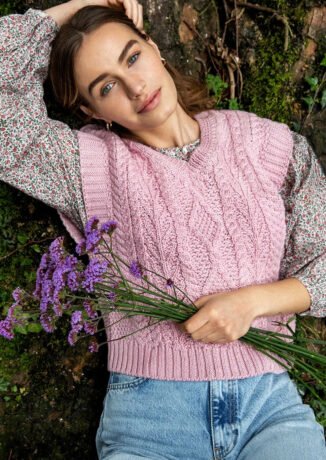
Ladies V-Neck Sweater Vest Pink

So, whether you’re envisioning cozy evenings by the fire or strolls through autumnal landscapes, the allure of Irish wool sweaters and tweed garments is a siren call that beckons you to indulge. Let tradition and craftsmanship envelop you in a warm embrace, while sustainable fabrics and modern design seamlessly weave the narrative of a fashion-forward future. Step into the world of fashion reimagined, where each garment carries a legacy and every accessory tells a story.

Ireland can trace its history back thousands of years. That’s just one good reason why we call our gifts timeless.  Celtic Clothing is committed to sharing our proud Irish heritage with friends old and new across these United States. We are honored to have your support of our small, family-owned business.


Posted on Leave a comment

Letter from Louisville Kentucky to Ireland, Transcript – Oct 10th, 1839.

Irish Emigrant Letter home.

The following is a transcription  of a letter sent in 1839 by an Irish immigrant called Henry Neill to his parents in Ireland. The original letter with original calligraphy was published in full on this site 12 months ago.

“Louisville, KY.  Oct 16th 1839.

Dear Father,  Yours of the 6th April last came duly to hand at which time John wrote to you and as he expected an answer before he left I must say he was rather dissatisfied at the disappointment. 

He left this place on Saturday last on board the steamboat Wacousta bound to St.Louis from thence he will go further up the river & probably into the interior of the Territory of Iowa.  Our calculation is for him to buy a tract of land there or should he fail in that as soon as the winter sets in he will most likely go down to New Orleans & from thence to the Republic of Texas.  I have for some time past known but little of a country life being closely confined to the city but from information I can gather the farmers in this country are by far the happiest & independent part of the community.

And as I know you would wish to know something of the new countries, those to which the principal emigration is now (progressing?), are the states of Illinois, (Missouri?), Arkansaw (sic), together with the Territories of Wisconsin & Iowa, & last though not least the new & thriving Republic of Texas.

The price of land in this country is fixed by government at one dollar & a quarter an acre, but in addition a stranger going to a new country has to pay the squatter for his right the price of which may vary according to the location & improvements (if any), to explain this I may say these adventurers or what we call squatters go back into the new countries & settle upon a tract of land & live principally by hunting, then when the land comes to be sold by government orders, they having the (presumption?) right (if they wish) can get the land by paying $1.25 and acre (in preference?) to all others, but often the squatters not wishing to keep the land or probably not being able to pay for all they have claimed, sell their right of one portion to enable them to pay for the other or sometimes sell all & go further back & squat on another tract.

(?) but to return to the new states, Illinois is a free state as so will Iowa when it becomes a state (all new territories are admitted to the Union as soon as they contain a certain population).

Missouri is a slave state & therefore those emigrating to it are chiefly from Virginia and some others of the (old?) slave states with some French & Spaniards.  Those going to Illinois are from the eastern states with many (indecipherable?) Irish.  So with Iowa, this like many other names in this country is of Indian origin & means in our language Home or Sweet Home.

Texas is a vast extant of country adjoining the United States, it was formally under the government of Mexico but the inhabitants revolted and after many bloody conflicts have declared independence & formed a constitution similar to that of the (US?).  Every male emigrant to this country ((supposing?) to the constitution) receive a portion of the public land (grants?).

Your O’Connell has made a bold effort in the British House (Parliament) against consenting to the independence of this Republic but had it not been taken from a Papish government he would likely have kept silent on the subject slave system and all.

(I received?) a letter from John Arnold on Saturday last just in time for John to see it before he started (they are all well).  My health is well as John’s has been extremely good since we left you neither of us being confined for one day for a short time last Spring I was rather delicate at which time I took a trip to Cincinnati Ohio (after) which I have been perfectly healthy.

James Dixon is married.  He & his brother and their wives (illegible) Mrs. McKee who came out last season are all living in Pittsburgh.  Isabella Ringland is in Philadelphia & Abram still in his old situation with Myers.  I send you some of this country Newspapers from which you will see some of the divisions amongst us in politics.  Here the two great parties are one who calls themselves Whigs & calling the opposite party Loco focos – of course we belong to the Locos in Pennsylvania and many parts of the (text missing).

The great division is Mason and Antimason & in many parts (text missing)

Abolitionists (of which I could be willing one in number but that would be folly in Kentucky) are setting up great opposition to the slave system (I heartily wish them success as I am assured slaves are a curse to any country although the people here place great store by them & think they are their principal wealth a young lady here if she is possessed of a few negroes she is thought not common but rather above the ordinary (ladys?) though in my estimation being raised with those negro attendants is the very thing that renders her worthless so much for the maiden of Kentucky.

While the ladies of the sister states Indiana or Ohio only separated by the Ohio river have by good (illegible) exercise working with their own hands acquired a far more healthy (illegible) and appearance & are (text missing) with their own industry worth will worth the slave holding belle with all her train of Africans.

I wish you to write as soon as this comes to hand as most likely it is the last letter you will ever have to direct to Louisville. My engagement here which is at $25(?) a month will be up on the first of April next at which time I intend to leave unless I get a liberal advance in salary or something else unknown may occur.  I would therefore wish to hear from you before that time expires & I shall again write to you as soon as I can give you any information concerning the success John may have on his voyage or where he may have settled as he will write to me as soon as he can give me any satisfaction.  I board & lodge with the family of James McCrum (?) so did my brother until within a month or so of leaving us.

The times are rather worse here than some time ago as was expected for some time the banks have again stopped paying (ineligible) for any of their notes they had suspended some time before we landed in this country & again resumed some time after I came to Louisville & have this day for the first again have refused to redeem their notes.

There are in this city several churches, two Episcopal, three Presbyterian to the first of which I belong William L Breckinridge is our minister.  Last summer they built a splendid new church so did the Episcopalians. There are also Methodists, Baptists & many others yes it would take a (ineligible) to describe all the different Religious denominations in this city.  Although I verify but not more than two thirds of the population attend any church or religion at all.  Hoping this might find you and all my inquiring friends well as it now leaves me & wishing to hear from you as soon as convenient. 

I remain your distant son
Henry Neill.

Posted on 3 Comments

Irishman’s Letter From America – 1840. Never Seen Before.

Irish Immigrant letter 1840.

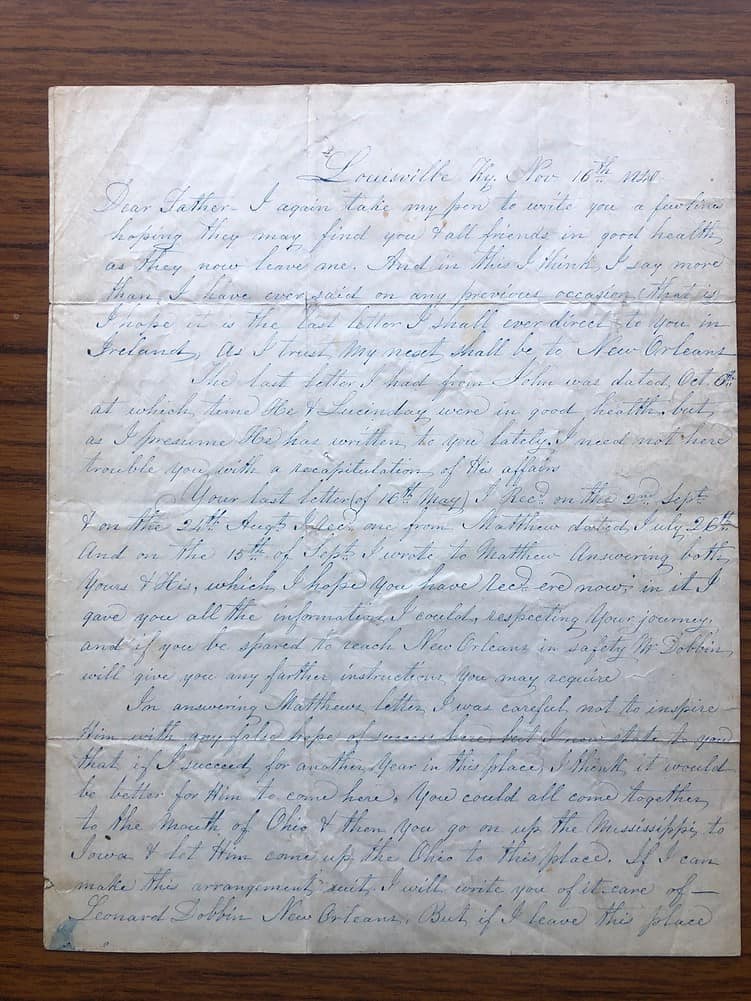
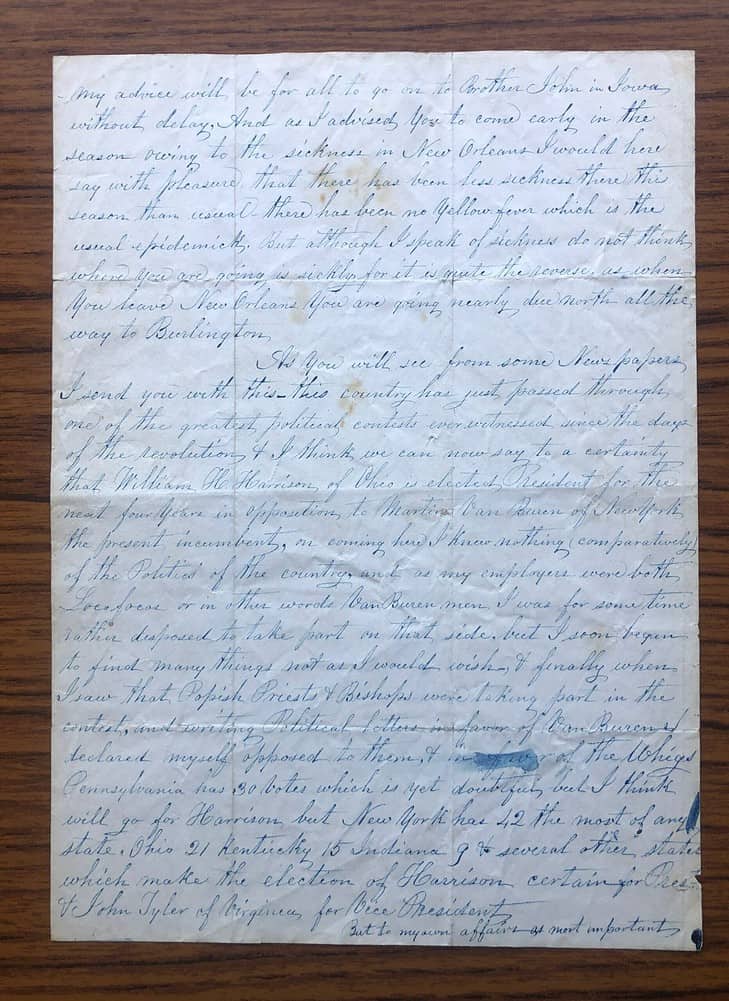
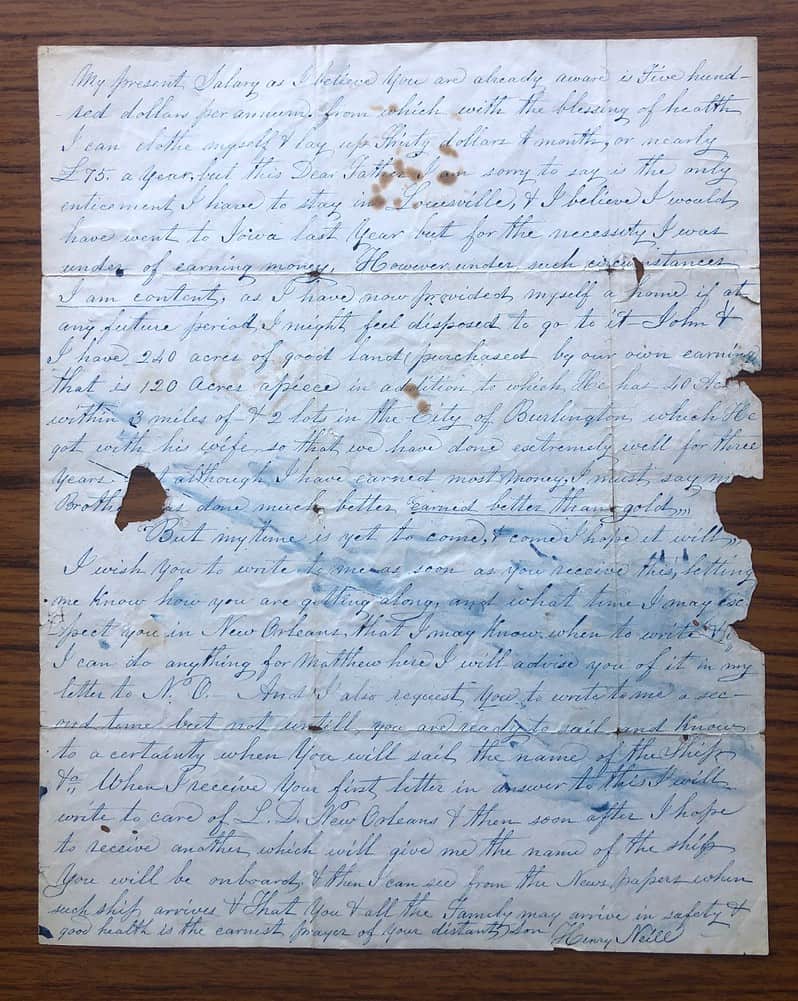
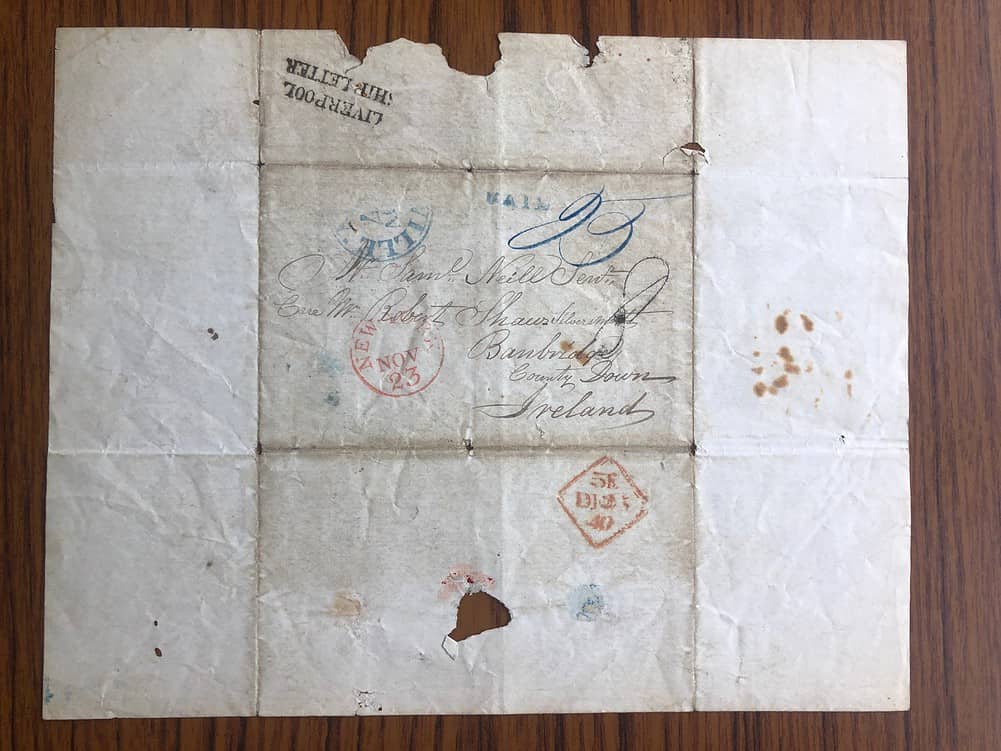
Can you help us solve a mystery?   This letter has not been seen for 183 years.  It is the 2nd in a series of approximately 20 letters.  The first Irish immigrant letter we have dates from 1836 and was digitized and published on this site 12 months ago.  The original letters still sit on a shelf in box in Ireland.  Using a non-flash iPhone I photographed the letters to preserve them for posterity.  I am making this 2nd digital copy available to you today, on the 4th of July, to celebrate the long shared history between America & Ireland; I hope you enjoy.

We are looking for clues & internet detectives.  Any assistance is greatly appreciated.  Given the handwriting, the language & tone, this is obviously a well educated immigrant.  What else can you derive from the content?  What happened to these Irish people after they landed in America?  Do they have descendants?  Feel free to take turns & transpose the content into the comments below to help us bring this 180 year old mystery full circle.
Yours, Charles Lord. M.Ed.

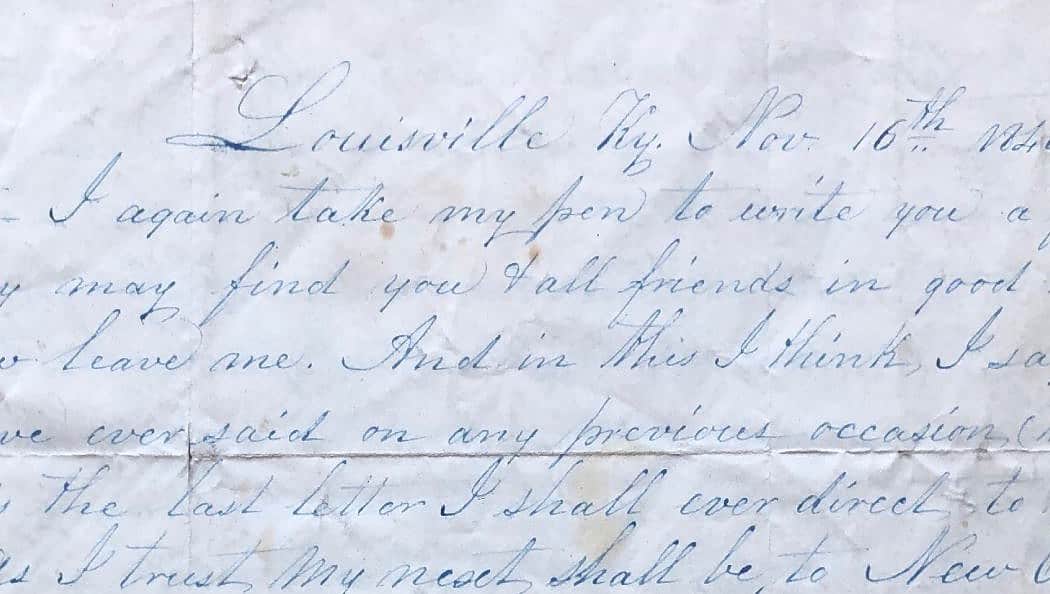
The letter begins “Louisville, KY.  Nov 16th 1840…. Dear Father, I again take my pen to write…”

Letter from America. 1840.

Irishman's letter home to Ireland from America. 1840.

Old immigrant letter from American to Ireland. 1840.

You can see from the stamps below, the letter was written Nov 16th 1840.  By Nov 23rd it was stamped in NY.  Did it travel by Pony Express?  The letter is also clearly stamped “Liverpool Ship Mail” so it probably sailed from New York to Liverpool England.  From England it would have made its way to Ireland.   Interestingly the letter is not addressed to Mr. Neill’s father; it is addressed “Care Mr. Robert Shaw, Silversmith.  Banbridge, Co. Down. Ireland.  I can only assume Mr. Shaw knew to keep the mail for the Neill family who were living on a farm a few miles outside town.  Perhaps they were members of the same congregation & could exchange correspondence for the mail on a Sunday.  Perhaps there was no Post Office in Banbridge, Co. Down, in 1840.  There is sufficient information there for Ancestry.com to pull up some good background information.

It would be great to read your comments and insights in the comments below.

Stamped letter to Ireland from USA. 1840.

Posted on 1 Comment

A Scots-Irish Adventure

Scots-Irish cottage from Ulster.

The great “Scots-Irish” migration to America began in earnest around 1718,  long before the Act of Union of 1801. So when the Scots-Irish migration began, Ireland was an independent Kingdom with a Parliament in Dublin, & the Scots-Irish simply regarded themselves as Irish.  Ireland consists of Four Provinces.  I live in Pennsylvania USA, but I am originally from Belfast in the Northern province of Ireland. That province is called Ulster;  it is one of Ireland’s Four Provinces, and Ulster includes nine of Ireland’s thirty-two counties. In the modern day three of the counties are in the jurisdiction of the Republic of Ireland, while the other six counties operate under British jurisdiction. Ulster is the region where the Scots-Irish came from. The same Scots-Irish that played such an important role in the foundation of the United States of America.

Scots-Irish cottage from Ulster.I’m excited to share an extraordinary journey I embarked upon recently. On this adventure I followed in the footsteps of the Scots-Irish when they landed in America.  The journey began on the Brandywine Battlefield in South-Eastern Pennsylvania , took me down the Shenandoah Valley and by chance led me to an old Irish cottage in Virginia. This encounter sparked a personal exploration into the captivating history and craft of the Irish linen industry, an integral part of the Scots-Irish Presbyterian heritage in the United States.
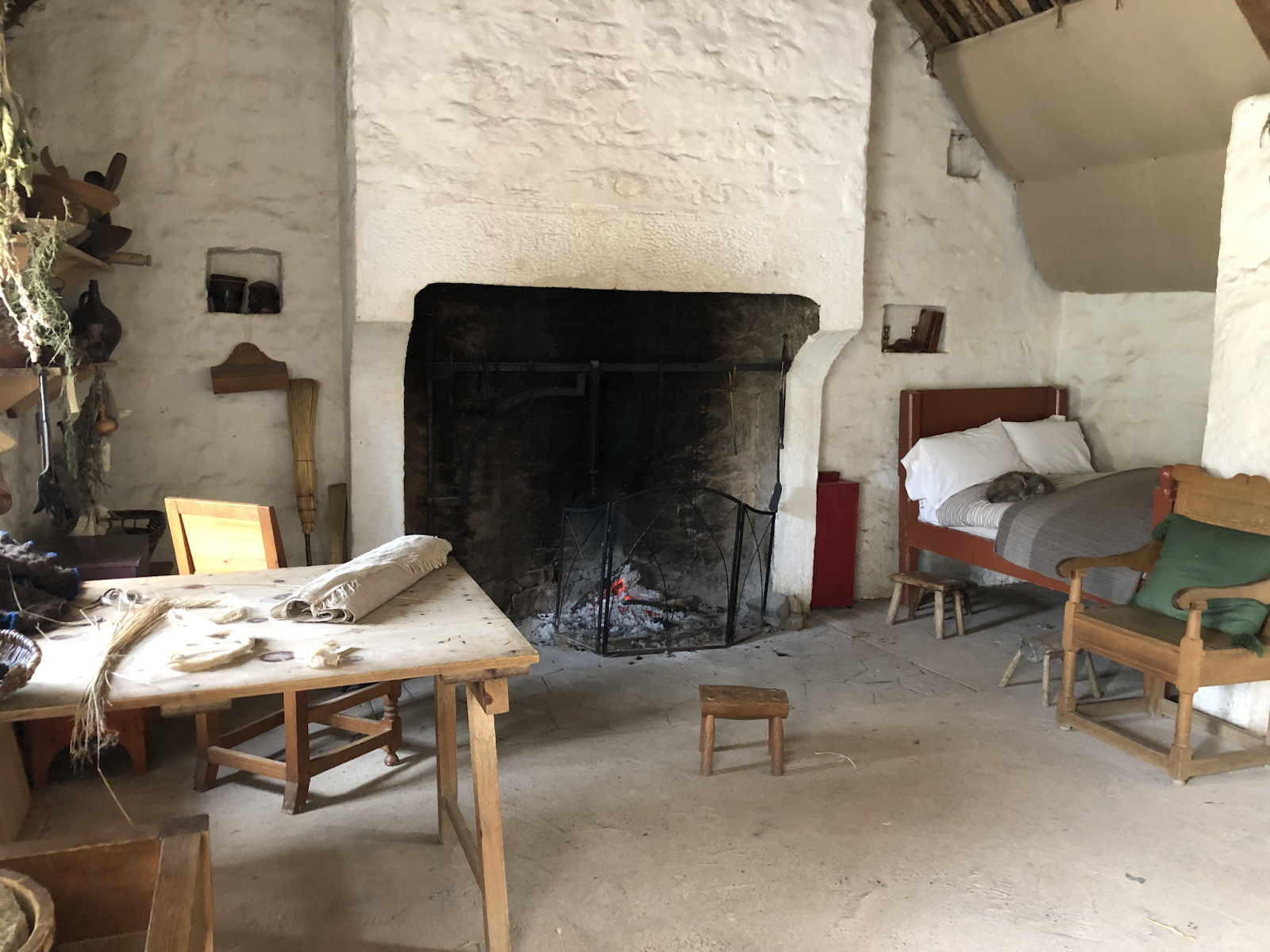
This cottage’s quaint, timeless nature bore witness to the literal definition of “cottage industry,” where home and work converged into a singular entity.

The cottage’s exterior was as enchanting as it was unassuming. It stood silently, resilient against the passage of time, its age obscured by the centuries. As I approached the dwelling, I could almost feel the echo of countless stories encapsulated within its rustic, earthen walls – stories of the Scots-Irish people, their struggles, triumphs, and the traditions they meticulously preserved.

Upon entering, I immediately felt the duality of the space; it was clear this was both a dwelling and a workspace. A modest bed rested in one corner, speaking volumes about the cottage’s past inhabitants; their lives are interwoven with their work. On a table to the left, flax, freshly harvested and full of potential, lay waiting to be spun into linen, a testament to the dynamic nature of the people who once called this place home.

Irish Wool in basket. Natural fibers.One of the most striking features inside the cottage was the presence of baskets brimming with raw materials – freshly sheared wool and unprocessed flax. As I ran my fingers through these natural fibers, I could easily imagine the skilled hands that once worked tirelessly, transforming these raw materials into practical, valuable threads.
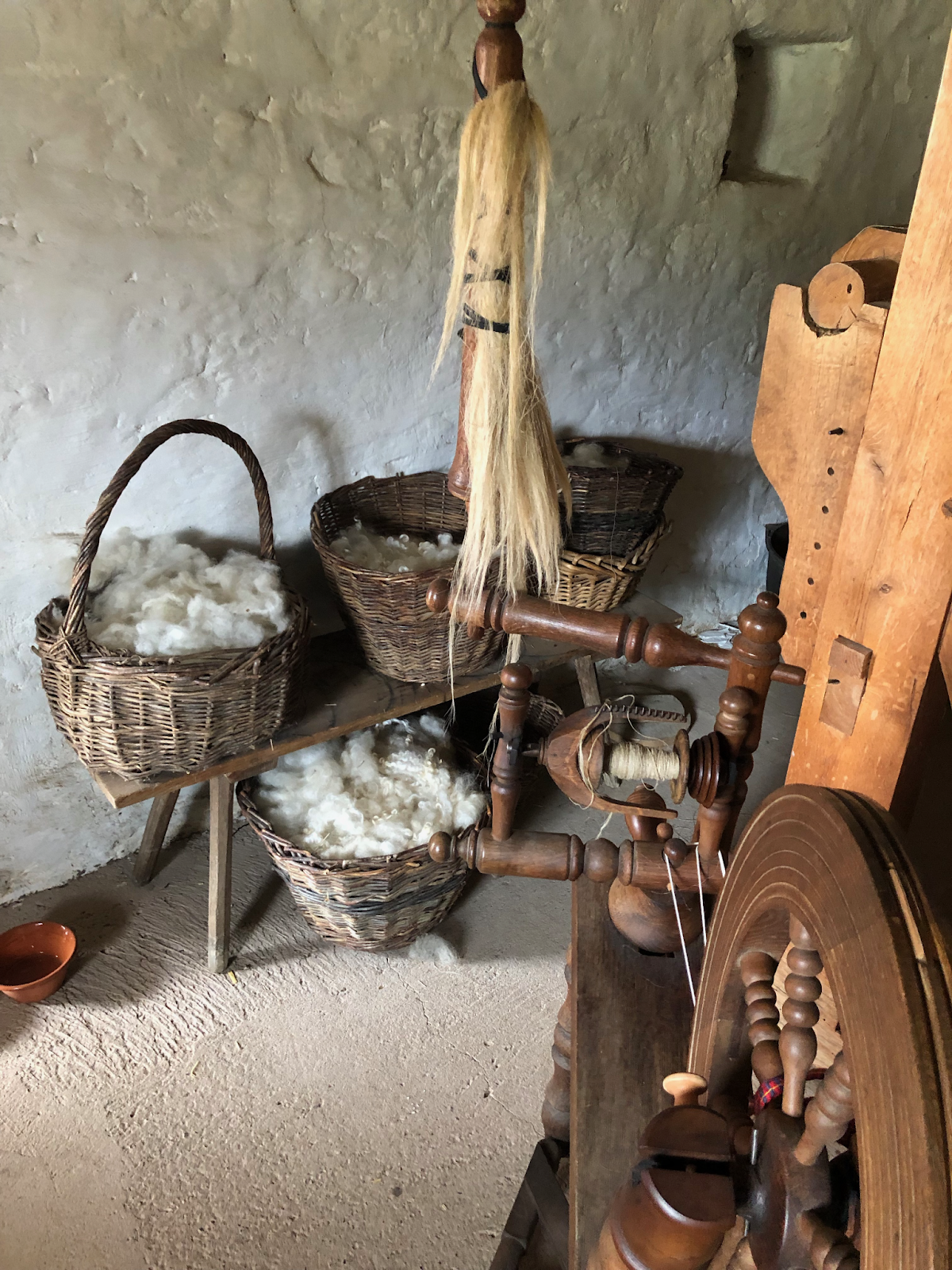
The soul of the cottage, undoubtedly, was the spinning wheel. This simple yet vital instrument stood ready to accept the combed wool or flax, its quiet presence a poignant reminder of the countless hours of dedication and skill required to spin these fibers into beautiful threads. This artistry passed down through generations, is a tangible link between the past and present.

I was struck by the vivid hues of dyed wool and linen yarn hanging in the cottage. It was a vibrant testament to the traditional craft, showing how the inhabitants skillfully extracted a spectrum of colors from these humble, natural fibers, transforming them into a myriad of textiles that brought life and beauty into their everyday existence.

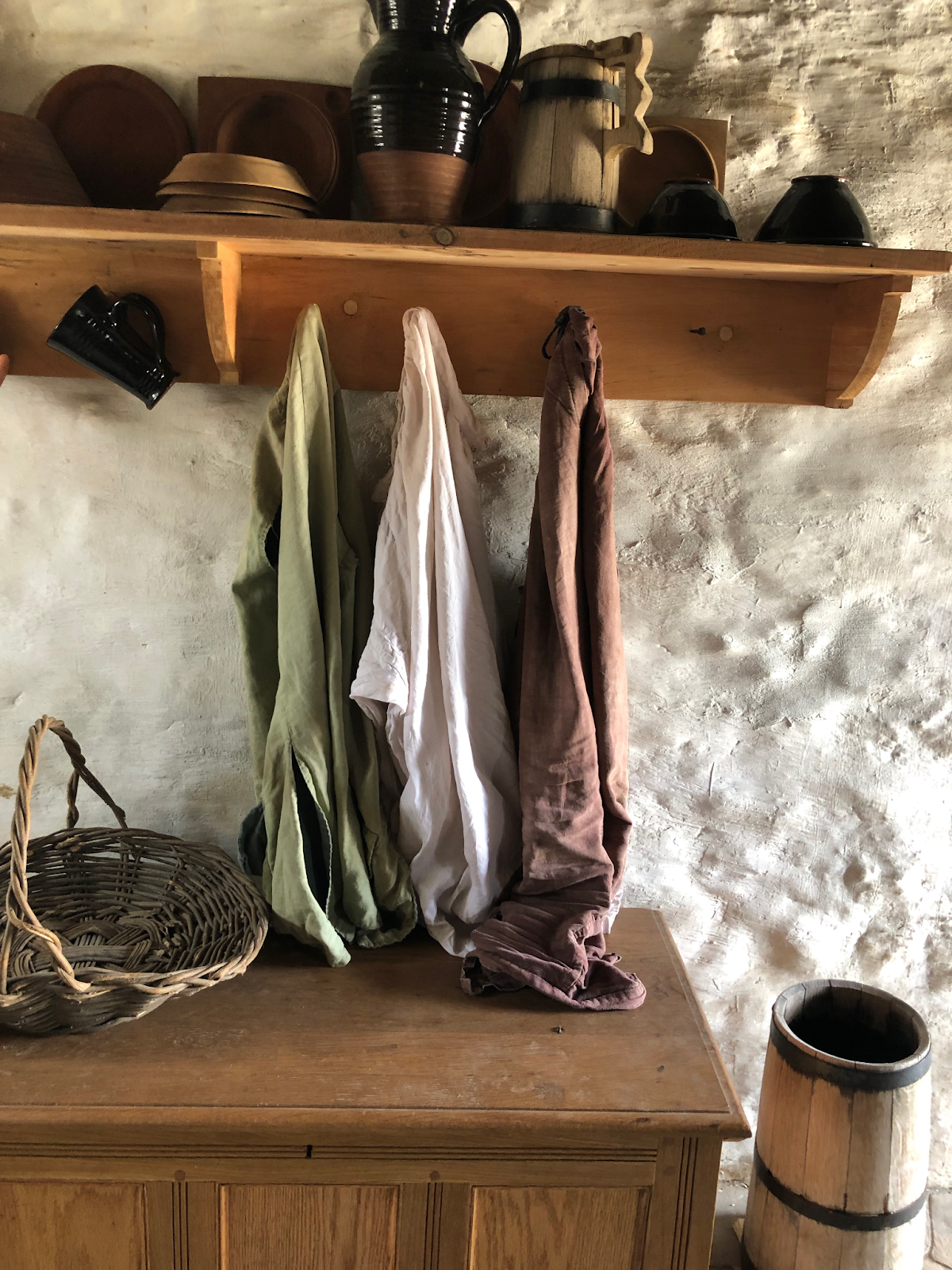
The culmination of this painstaking process was evident in three simple yet elegantly crafted linen shirts. Their mere presence illustrated the countless hours of work that went into each garment, from the careful cultivation of flax to the delicate spinning of threads and the crafting of clothing.

The cottage is not just a tribute to the skill of the Scots-Irish Presbyterians in linen-making. It also reminds us of their emigration to the American colonies between 1718 and 1770. Adapting to their new homeland, they applied their skills to the more abundant crop – cotton.

Today, linen – a natural and breathable fabric – continues to be a popular choice for summer clothing. Its versatility has allowed it to evolve from traditional grandfather shirts to modern accessories like golfing flat caps, stylish linen ties, and pocket squares.

For those who wish to own a piece of this rich heritage, you can find these high-quality products at the links below:

Hopefully, my journey through time and history has given you a deeper appreciation of the Ulster region’s rich linen heritage. It’s a testament to a people’s enduring spirit, a legacy that resonates today.

Posted on Leave a comment

Study in Ireland – Scholarship opportunities for U.S. students.

Students with study in Ireland opportunities.

Irish Diaspora Education Alliance

STUDY IN IRELAND

Empowering Youth, Enriching Communities.

IDEA stands for Irish Diaspora Education Alliance

This initiative aims to offer affordable college opportunities in Ireland for American-born students. The program is open to all U.S. families considering full-time University/College in Ireland.   The non-profit working group consists of native born Irish & Irish-Americans drawing on expertise from the world of business, education & legal professions in both Ireland & the United States.  IDEA is a function of the Irish Diaspora Center in Philadelphia. 

The Irish Diaspora Center is currently working with the following Irish Colleges / Universities.

IDEA has Tuition Scholarships agreements with:

IDEA Partnership Discussion Currently Underway:

If interested in applying to one of our Irish University Partners, and to avail of scholarship opportunities, please let us know by completing the linked Information Sheet and we will connect you.

Partnership Press Releases:

October 15, 2021: DCU – Up to five partial scholarships on offer.

March 15, 2023: University of Galway with nine partial scholarships on offer.

Foroige-Irish-flag.jpg

Posted on Leave a comment

Irish Diaspora Education Alliance – Study in Ireland Opportunities

Study in Ireland opportunity.

REGISTER HERE

CelticClothing.com is proud to support the Irish Diaspora Education Alliance

The Coalition of Irish Immigration Centers advances its members through collaboration and education to benefit the Global Irish in the United States.

The Coalition is proud to partner with our member center, the Irish Diaspora Center, to share information about an exciting, upcoming virtual event.

The Irish Diaspora Education Alliance (IDEA), an initiative of the IDC, aims to offer affordable college opportunities in Ireland for American born students. The program is open to all U.S. families considering full-time University/College in Ireland, and currently has 19 scholarships available to eligible students at the following institutions:

  • Dublin City University;
  • University of Galway;
  • Queen’s University Belfast;
  • Atlantic Technological University.

To be eligible for the program, applicants must:

  • Be referred by the IDEA;
  • Be able to provide completed High School transcripts;
  • Be eligible for Irish citizenship at minimum through parent/grandparent (for some).
  • Or show demonstrable engagement & participation in Irish cultural events.

The IDC is hosting a virtual information session about the IDEA program on 17 October at 5:30p EST. We invite you to register to HERE to learn more about this initiative, as well as share this opportunity widely with your community members; the session is open to anyone with interest.

This is a great opportunity for American students to receive an excellent third level education in an international setting – do not miss this opportunity to learn more! Further details can be found on the flyer below.

Please do not hesitate to reach out with any questions, and let me know if you plan to attend.

REGISTER HERE